
CIEN E4236: Design of Prestressed Concrete Structures
From bridges to offshore platforms, discover how cutting-edge materials and engineering techniques enable the design of massive, high-performance prestressed concrete structures.
Course Overview
Technological advancements in the science of materials have made it possible to construct and assemble large-span prestressed concrete structural systems such as cable-stayed bridges, nuclear reactor vessels and offshore oil drilling platforms. These systems are made possible by effectively synthesizing the high tensile strength of prestressing steel cables with the inherent high compressive strength of concrete.
This course explores the time dependent behavior of materials used in prestressed concrete structures, including concrete shrinkage and creep, and steel cable relaxation. We will cover methods of prestressing such as pre-tensioning and post-tensioning, along with various types of cable anchorages, jacking systems, grouting, and the associated frictional and curvature related prestress losses.
The course will expose students to the design of various prestressed concrete structural elements in accordance with building code requirements of ACI 318-19 and ACI 318-25.
Course Instructor
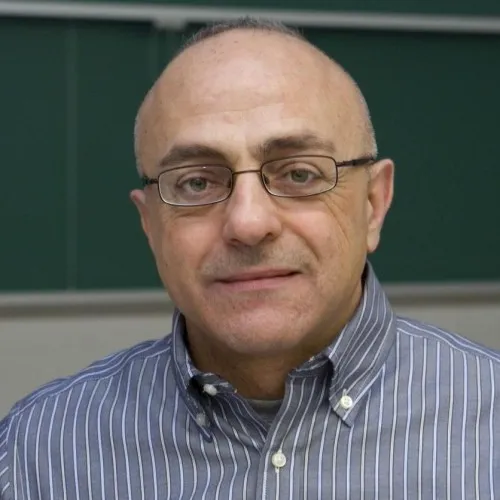
Tom Panayotidi
Senior Lecturer in the Discipline of Construction Engineering and Management
Tom T. Panayotidi is a registered professional engineer in the states of New York and New Jersey, with over 30 years of practical experience in the design of structures and foundations for static and dynamic (machinery/seismic) conditions. As a Principal Engineer for Burns and Roe, Inc. and for Power Engineers, Inc., he has been involved in the design of several USACE (U.S. Army Corps of Engineers) and DOE (U.S. Department of Energy) projects and numerous power generating stations across the United States, Central America and Asia. As a Principal Structural Engineer for General Electric-Hitachi (GEH), he has been actively involved in the structural design of the new generation nuclear power plant BWRX-300 SMR (Small Modular Reactor), using advanced computational techniques that incorporate the post-elastic behavior of building materials under cyclic-seismic loads and large temperature gradients.
Panayotidi received his BS degree in Mechanical Engineering (1981), MS (1983) and Doctor of Engineering Science (1986) degrees in Civil Engineering and Engineering Mechanics from Columbia University. He is currently a Lecturer in the Department of Civil Engineering and Engineering Mechanics. Before joining Columbia University in 2013, he has taught several mechanics based design courses as an adjunct professor at local universities, including Structural Dynamics, Design of Foundations, Advanced Steel Design, Advanced Concrete Design, Design of Prestressed Concrete, Theory of Plates and Shells, and others.