
Welcome to Columbia University's dedicated center for the advancement of aerospace structures. A bold new chapter in aviation where cutting-edge technology meets visionary research and design.
Mission Statement
The Guggenheim Initiative for Aerospace Structures at Columbia University is dedicated to advancing the frontiers of aerospace engineering through cutting-edge research, transformative education, and the cultivation of future leaders in the field.
Our mission is to foster innovation in the design, analysis, and application of aerospace structures, while providing students and researchers with the skills, knowledge, and opportunities to thrive in an evolving global aerospace industry. Through interdisciplinary collaboration, hands-on learning, and strategic partnerships, we aim to bridge the gap between academic discovery and real-world impact, empowering our community to shape the next generation of aerospace technologies.
Our Objectives
Graduate students can join the Initiative and receive specialist training in aerospace structures and materials. Classes are designed in close conjunction with our wider research efforts to ensure students are exposed to the most cutting-edge techniques and insights.
Related courses:
- Advanced Continuum Mechanics
- Advanced Mechanics
- Advanced Mechanics of Solids
- Experimental Solid Mechanics
- Finite Element Analysis I
- Finite Element Analysis II
- Introduction to Aerospace Engineering
- Mechanics of Fiber-Reinforced Composites
- Mechanics of Fracture and Fatigue
- Multiscale Analysis
- Multiscale Computational Science and Engineering
- Nonlinear Computational Mechanics
- Stochastic Engineering Mechanics
- Structural Health Monitoring
- Theory of Vibrations
- Turbulence Theory and Modeling
- Uncertainty and Risk in Infrastructure Systems
- Viscoelasticity and Plasticity
For more information on these courses, visit our Bulletin.
We conduct pioneering research covering all aspects of flight structural engineering, from design and analysis to theory, development and experimentation. Fostering collaboration across the aerospace community, our aim is to further the collective understanding of the challenges and opportunities facing the industry.
Current:
ICME Optimization of Advanced Composite Components of the Aurora D8 Aircraft
PI: Professor Maiaru Funding: NASA
This project aims to develop an Integrated Computational Materials Engineering (ICME) platform that enables the design and optimization of composite structural components starting from virtual manufacturing processes. By linking material behavior, process conditions, and structural performance in a unified digital framework, the project supports performance-driven design of next-generation aerospace components with improved efficiency, reduced weight, and accelerated development timelines.
NSF CAREER: Curing-Induced Microcracking in Thermoset Composites
PI: Professor Maiaru Funding: National Science Foundation
This NSF CAREER project investigates the mechanisms and modeling of microcrack formation during the curing of thermoset composites, aiming to understand how processing conditions influence damage evolution at the microstructural level. The research combines multiscale modeling, experimental validation, and process optimization to enable the design of more reliable, high-performance composite materials. The project also integrates educational initiatives to train the next generation of engineers in advanced composite processing and predictive modeling.
Computational C/C Materials Development
co-PIs: Professor Maiaru & Professor Fish Funding: Air Force Research Laboratory
This project aims to develop next-generation carbon fiber/carbon (CF/C) composites with significantly enhanced manufacturability and mechanical performance through a multiscale, computationally driven design and optimization framework. Multiple computational techniques enable modeling the precursor infiltration, polymerization, and carbonization, and use these tools to optimize key manufacturing parameters such as pressure, temperature, and resin selection. Fabrication and testing methods are established to validate the performance and durability of polymer infiltration pyrolysis (PIP) processed composites. In collaboration with AFRL/RX, the team is exploring a range of phenolic, benzoxazine, and mesophase pitch precursors from industrial partners including Hexion, Solvay, Huntsman, and Bonding Chemical, representing both conventional and novel systems for high-performance CF/C applications.
Past:
Multiscale Modeling of Advanced Fiber-reinforced Thermoset Composites During Curing
PI: Professor Maiaru Funding: NASA
This project focused on multiscale process modeling of thermoset fiber-reinforced composites, with an emphasis on capturing microstructural evolution during curing. Starting from material properties predicted by molecular dynamics (MD) simulations, the model bridges the molecular and microscale to simulate curing-induced stresses and composite performance as a function of processing parameters.
Physics-based Process Modeling for High-Temperature and High-Strength Composites
PI: Professor Maiaru Funding: Air Force Office of Scientific Research
This project resulted in a predictive modeling framework for the processing of polymer-derived composites for high-temperature high-strength components used in aerospace applications. The project integrated fundamental physics with multiscale modeling to simulate key phenomena such as pyrolysis, microstructure evolution, and residual stress development. By linking material chemistry, processing conditions, and structural performance, the framework enables the design and optimization of high-temperature, high-strength composites critical for extreme aerospace environments.
We offer a wide variety of activities designed to engage the aerospace community with the most cutting-edge industry practices and theories.
Guggenheim Initiative for Aerospace Structures Welcome Day
- Join us on Sept 9 for an engaging day of keynote talks, panel discussions and networking sessions to celebrate the launch of our Initiative! Register to secure your spot!
AIAA Design, Build, Fly Club:
- Email Marianna Maiaru to find out more about joining the club
Panels:
- iComp2 Lab Inauguration - Info coming soon
- The Next Frontier in Aerospace Innovation Panel - Info coming soon
Seminars:
- ICME: The Future of Lightweight Aerospace Structures - Info coming soon
Our Team

Marianna Maiaru
Director of the Guggenheim Flight Initiative, Associate Professor in the Department of Civil Engineering and Engineering Mechanics
Marianna Maiaru is an expert in Integrated Computational Materials Engineering (ICME), process modeling, and computational mechanics. She received her PhD in Aerospace Engineering as a collaboration between Politecnico di Torino in Italy and the University of Michigan. Her research interests include composite structures, damage mechanics, multi-scale analysis, higher-order finite elements, and additive manufacturing. Maiaru has received numerous grants from NASA, NSF, and the Air Force, including the AFOSR Young Investigator Program award in 2020 and the NSF CAREER award in 2022. She received the DEStech Young Researcher Award in 2021 and the AIAA ICME Prize in 2020 and 2022. Professor Maiaru is an Assistant Editor for Composites Part A: Applied Science and Manufacturing.
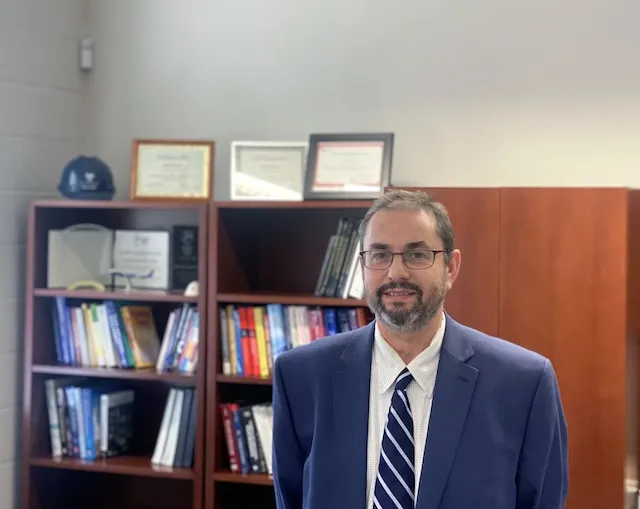
Haim Waisman
Chair and Professor of Civil Engineering and Engineering Mechanics
Haim Waisman’s research is in Computational Mechanics with a focus on Fracture and Damage Mechanics considering the Multiphysics and Multiscale response of materials.
He has developed novel finite element methods with special interest in extended finite elements (XFEM), damage/phase field methods, cohesive zone methods, multigrid/multiscale methods, mixed finite element formulations, inverse optimization problems, and scientific/parallel computing.
Waisman has been engaged in diverse applications with a wide range of temporal and spatial scales, e.g. high strain rates impact problems, delamination of composite materials, topology optimization, and crack detection in structures, damage of suspension bridges and concrete structures, hydraulic fracture of rocks and ice sheets in polar regions.
Haim Waisman obtained his Bachelor’s and Master’s degrees in aerospace engineering from the Technion-Israel Institute of Technology, in 2002 and a Doctorate in civil engineering from Rensselaer Polytechnic Institute (RPI), in 2005. He was also a post-doctoral fellow in the Scientific Computing Research Center (SCOREC) at RPI and in the Mechanical Engineering department at Northwestern University before joining Columbia University in 2008. Waisman and his students have won several best paper and poster awards. He is the recipient of the Department of Energy Early Career Award, in 2012 and the Leonardo Da Vinci Award from the Engineering Mechanics Institute of ASCE, in 2014.

Jacob Fish
Robert A.W. and Christine S. Carleton Professor of Civil Engineering
Jacob Fish is a computational scientist who creates simulation-based design approaches that: (i) remove traditional scale related barriers between physics, chemistry, biology, and various engineering disciplines; (ii) is predictive rather than diagnostic; and (iii) multiphysics-multiscale rather than phenomenological.
Fish has made many fundamental and seminal contributions to multiscale computational science and engineering. Among the noteworthy contributions are: scale separation-free homogenization methods, reduced order multiscale methods, stochastic multiscale methods, temporal multiscale methods, methods accounting for dispersion and micro-inertia effects, coupling of multiple thermo-chemo-electro-mechanical processes at multiple spatial and temporal scales, multiscale enrichment methods, upscaling of discrete media, and algebraic multigrid and domain decomposition based multiscale methods.
Other noteworthy scientific contributions include but not limited to hybrid data-physics driven multiscale methods, high-volume resin transfer molding methods, integrated manufacturing-product design simulation methods, and an additive hypo-elasto-plasticity formulation based on so-called kinetic logarithmic stress rate that was proven to coincide with the multiplicative hyper-elasto-plasticity formulation, and thus enabling to extend a library of exiting infinitesimal inelastic material models to large deformation regimes, that until now, not feasible by existing corotational frameworks.
His research has had tremendous impact on industry: his multiscale methodologies have been employed for manufacturing of GE90 fan blades; environmental degradation of turbo-engines for General Electric, United Technologies, and Rolls-Royce; life prediction of aerospace components for Lockheed-Martin, Northrop-Grumman, and Sikorski; energy absorption of composite cars manufactured by General Motors; aging and environmental degradation of composites in collaboration with Boeing and GE Aviation; reinforced concrete structures; piezoelectric and ferroelectric materials; various nanotechnology applications ranging from nanodevices to nanomaterials; and most recently, additive manufacturing, fracture of femur, and manufacturing processes.
Fish received a PhD in Theoretical and Applied Mechanics from Northwestern University in 1989. He serves as an editor-in-chief of the Journal of Multiscale Computational Engineering, editor of the International Journal for Numerical Methods in Engineering, and is on the editorial boards of numerous journals. He is a past president of the United States Association for Computational Mechanics (USACM); a Fellow of American Academy of Mechanics, United States Association for Computational Mechanics (USACM), and the International Association for Computational Mechanics (IACM).
Jacob Fish received his BS in structural engineering in 1982 and his MS in structural mechanics in 1985 from Technion – Israel Institute of Technology. In 1989, he graduated with a PhD in theoretical and applied mechanics from Northwestern University. He joined the faculty of Columbia Engineering in 2010.
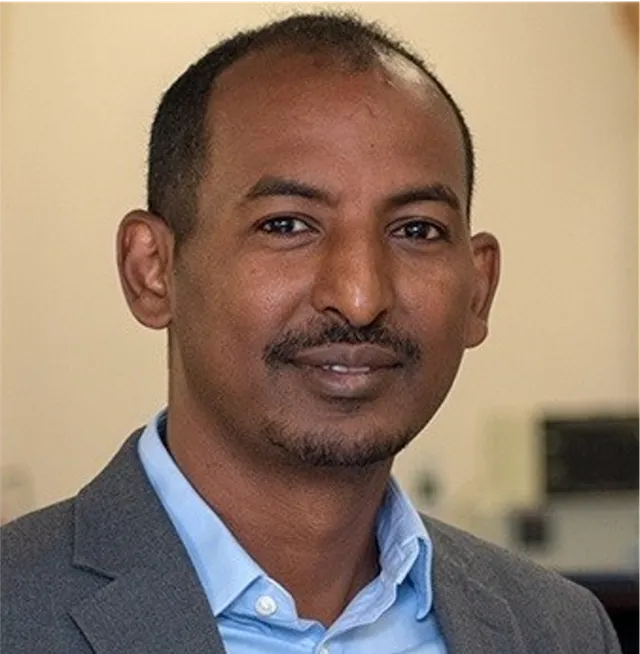
Addis Kidane
Associate Professor of Civil Engineering and Engineering Mechanics
Professor Kidane’s field of research is experimental solid mechanics, focusing on the mechanics of materials such as composites, nanocomposites, functionally graded materials, cellular materials, polycrystalline, and energetic materials at high strain rates loading and temperature.
Kidane’s current research is focused on three main themes of mechanics of materials: (i) understanding the failure mechanisms in heterogeneous materials, such as rigid foams, composites, and energetic materials subjected to impact loading, ii) damage mechanisms in functionally graded materials, polycrystalline metals, and composite vi local in-site DIC and iii) effect of nanoparticles on the thermal and mechanical properties of nanocomposites and fiber-based composites.
Kidane obtained his doctoral degree in Mechanical Engineering and Applied Mechanics from the University of Rhode Island (URI) and spent two years at the California Institute of Technology as a postdoctoral scholar. Prior to joining Columbia University in January 2022, Kidane served as assistant professor and associate professor in the Department of Mechanical Engineering at the University of South Carolina.
Join our Community
Graduate Civil Engineering and Engineering Mechanics students can join the Guggenheim Flight Initiative and support our research efforts.
For information email: [email protected]
Our History
The Initiative, formerly known as the Guggenheim Institute of Flight Structures, was founded in 1954. Funded by the Daniel and Florence Guggenheim Foundation, it was established as a center for advanced education and research in aeronautical and aerospace applications.
Today, the Initiative gives students the opportunity to receive specialist training and conduct research with leading aerospace engineers. As well as established research areas, we have placed new emphasis on the advancement of computing environments to address the challenges of modern aerospace sciences. This ensures we continue to offer the most cutting-edge solutions that will shape the future of the aerospace industry.