
Guggenheim Initiative for Aerospace Structures Welcome Day
To celebrate the launch of Columbia University’s new Guggenheim Aerospace Initiative, we are hosting an engaging day of keynote talks, panel discussions and networking sessions.
Hear from leaders in government, industry, and academia who are shaping the future of aerospace, including experts from Columbia University, NASA, the Air Force Research Laboratory, and Aurora Flight Sciences. A special career session will be hosted by one of our guest speakers during the afternoon for students interested in working in this ground-breaking field.
Free lunch, snacks and drinks will be available throughout the day. After the event, we will also be hosting a social in the CEEM Department, 6th floor MUDD, to celebrate the start of the new semester. All Columbia students, faculty and staff are welcome!
REGISTER TO SECURE YOUR SPOT TODAY!
Our Welcome Day is your opportunity to:
- Find out more about how to join the Initiative and the aerospace opportunities available for students at Columbia University
- Explore cutting-edge aerospace research at Columbia University
- Learn from NASA engineers about next-generation space materials
- Gain valuable insights during our specialist aerospace career session
- Network with aerospace professionals and the wider Engineering community during lunch and at our CEEM social
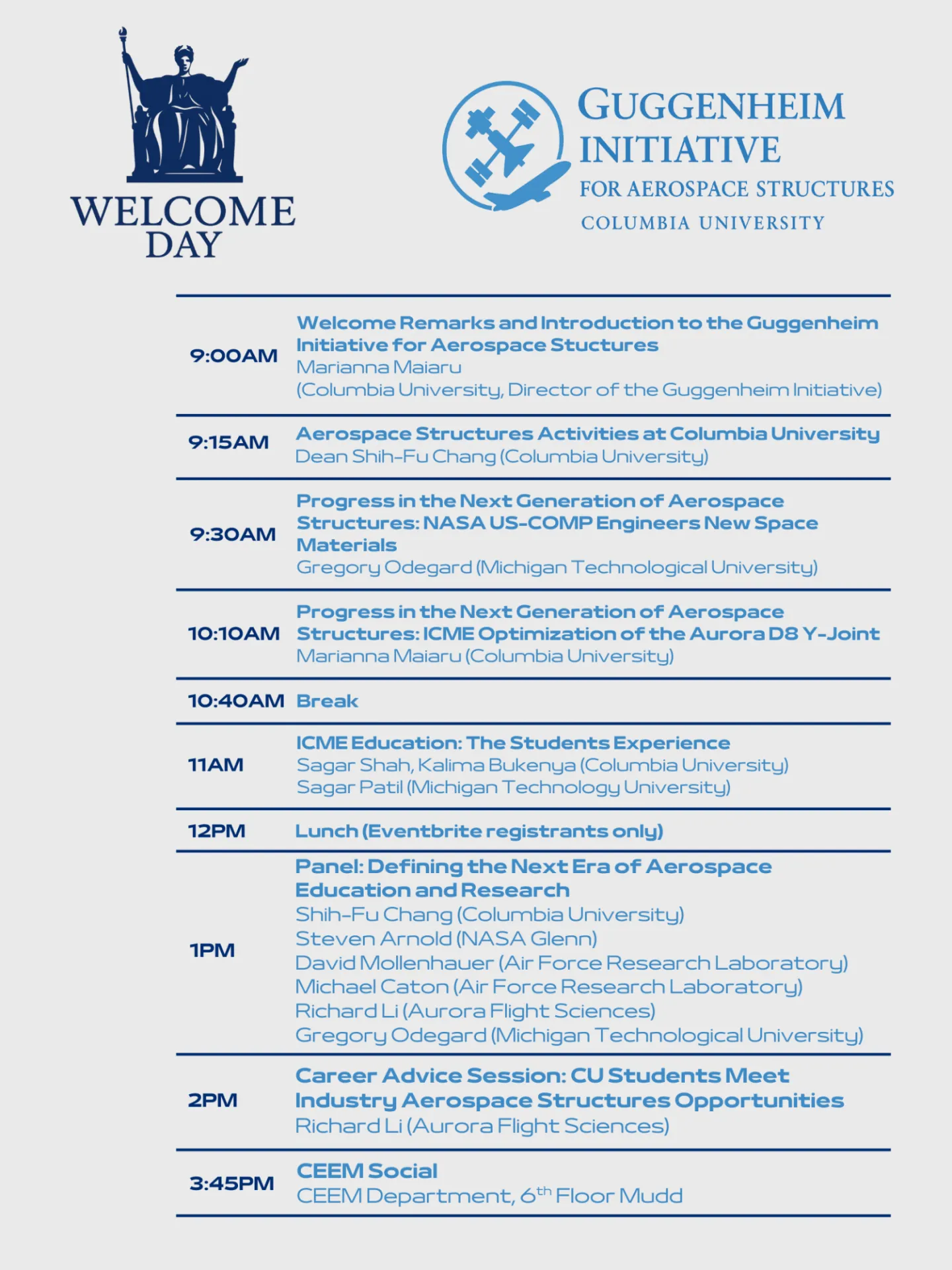
The Program
Panel Speakers
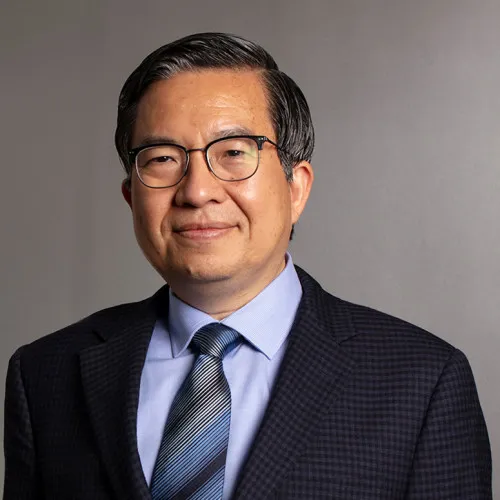
Dean Shi-Fu Chang
Dean of Columbia Engineering
Shih-Fu Chang is Dean of Columbia Engineering and Morris A. and Alma Schapiro Professor. He leads the education, research, and innovation mission of the School and has greatly contributed to its growth and advancement, propelling it to be one of the top engineering programs in the nation.
As one of the most influential experts in multimedia, computer vision and artificial intelligence, his research has led to development of innovative image search tools, which have been used by major media companies and law enforcement agencies in fighting online human trafficking crimes. He has also launched AI tools for online disinformation detection and attribution.
Dean Chang is a Member of the National Academy of Engineering, a Fellow of the National Academy of Inventors, the American Association for the Advancement of Science, the Association for Computing Machinery, and IEEE, and an elected member of Academia Sinica. He received an Honorary Doctorate from the University of Amsterdam and the Great Teacher Award from the Society of Columbia Graduates. He is the inaugural director for Columbia Center of AI Technology in collaboration with Amazon. He received his BS from National Taiwan University in 1985 and his PhD from the University of California-Berkeley in 1993.

Marianna Maiaru
Columbia University, Associate Professor in the Department of Civil Engineering and Engineering Mechanics, Director of the Guggenheim Initiative for Aerospace Structures
Marianna Maiarù is an expert in Integrated Computational Materials Engineering (ICME), virtual manufacturing, and computational mechanics.
She received her PhD in Aerospace Engineering as a collaboration between Politecnico di Torino in Italy and the University of Michigan. Her research interests include composite structures, damage mechanics, multi-scale analysis, higher-order finite elements, and additive manufacturing. Maiaru has received numerous grants from NASA, NSF, and the Air Force, including the AFOSR Young Investigator Program award in 2020 and the NSF CAREER award in 2022. She received the DEStech Young Researcher Award in 2021 and the AIAA ICME Prize in 2020 and 2022. Prof. Maiaru is an Assistant Editor for Composites Part A: Applied Science and Manufacturing.
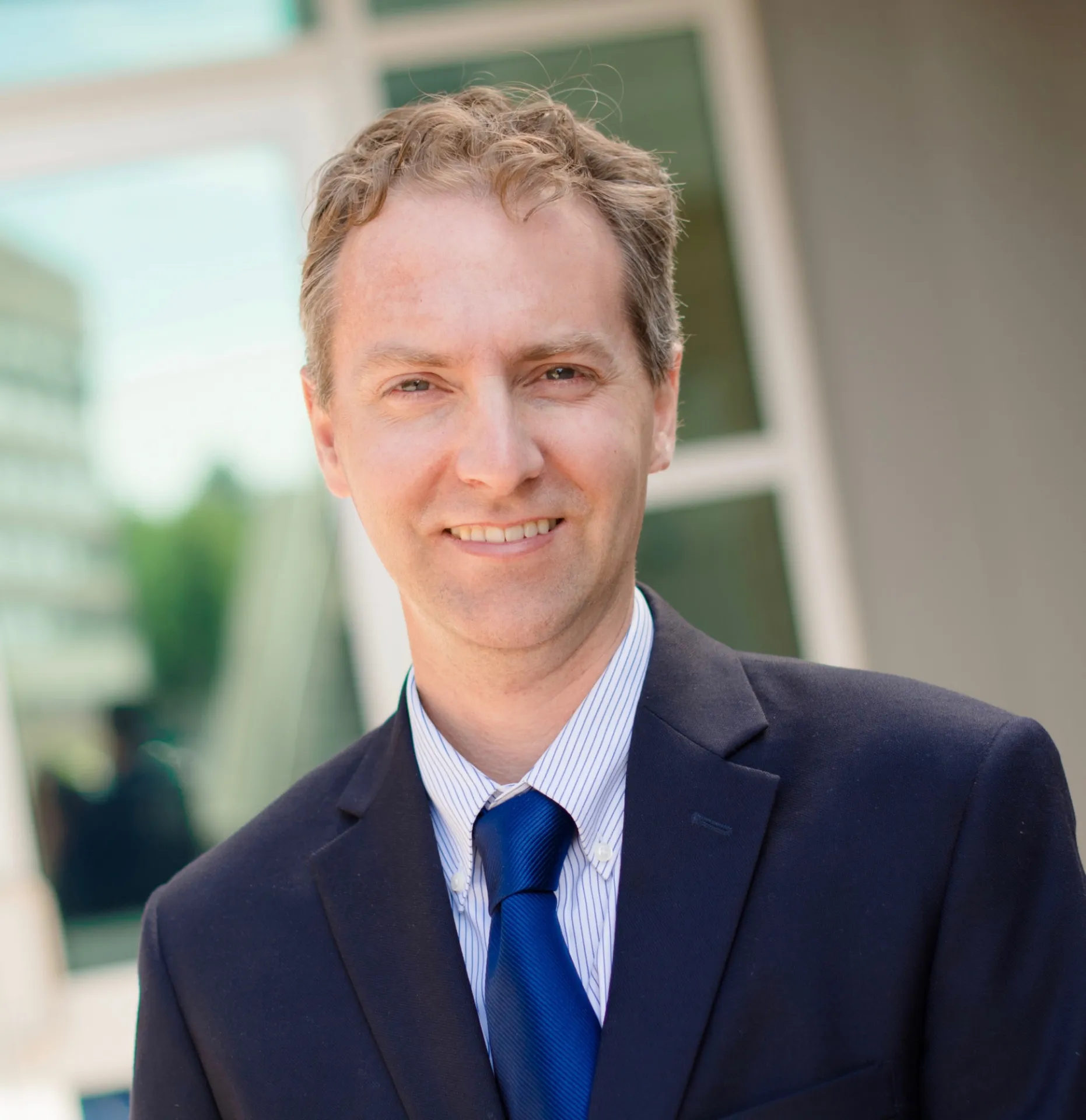
Gregory Odegard
Chair, Michigan Tech, Department of Mechanical and Aerospace Engineering
Professor Gregory Odegard is the John O. Hallquist Endowed Chair in Computational Mechanics in the Department of Mechanical and Aerospace Engineering at Michigan Tech. He is the Director of the NASA Institute for Ultra-Strong Composites by Computational Design, which is focused on development of the next generation of composites materials for manned deep-space missions. Before joining the faculty at Michigan Tech, Greg was a researcher at NASA Langley Research Center from 2000-2004. His research is focused on computational modeling of advanced composite systems. He is the recipient of the NASA Outstanding Public Leadership Medal, is a Fellow of ASME, and an Associate Fellow of AIAA.
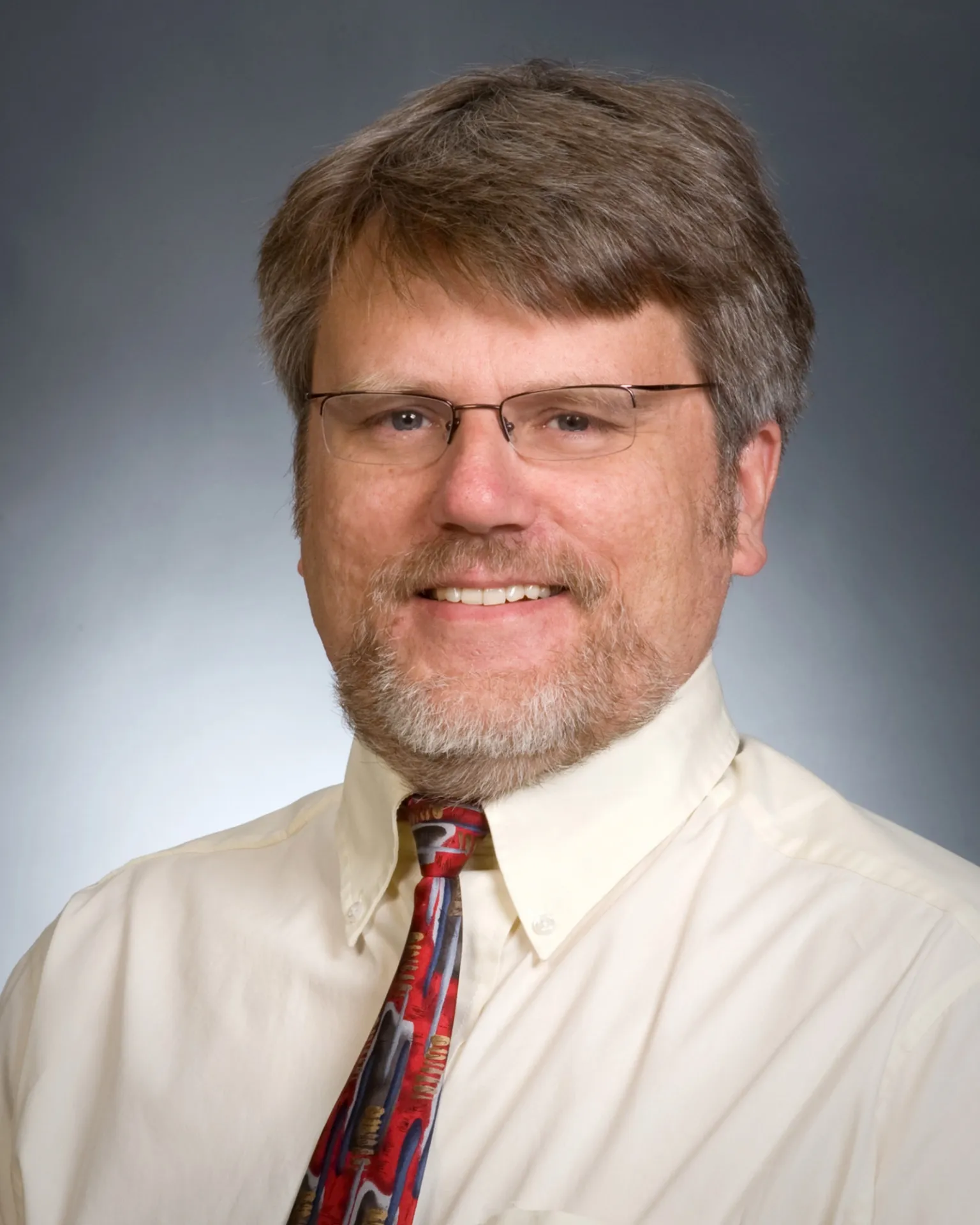
Steven Arnold
Technical Lead for Multiscale Modeling within the Materials and Structures Division, NASA Glenn Research Center
Dr. Steven M. Arnold is currently the Technical Lead for Multiscale Modeling within the Materials and Structures Division at NASA Glenn Research Center with over 40 years of experience. He also is the Technical Lead for the Materials and Structures Discipline within the Transformative Tools and Technology (TTT) project. Dr. Arnold conducts research involving theoretical and experimental investigations of structural material behavior of advanced aircraft propulsion systems and spacecraft structures. He has over 525 technical publications, 119 of which are journal publications and is a co-author of two books on micromechanics of composites, i.e., “Micromechanics of Composite Materials: A Generalized Multiscale Analysis Approach” 2013 and “Practical Micromechanics of Composite Materials” 2021.
He received NASA’s Exceptional Service Medal in 2019, NASA’s Exceptional Technology Achievement Medal in 2014 and the NASA Glenn Abe Silverstein outstanding research award in 2004. He also was awarded the ASC/DEStech Award in Composites for 2015. He is, on the NAFEMS Americas Steering Committee; an ASM International Fellow (class of 2013), Past Chair of the Core and Emerging Technologies Council for ASM, and participates on the Materials Data Information & Data Analytic Technical Committee; a member of AIAA, current Deputy Director ADSG Forum Coordination and active participant in the Materials Technical Committee, ICME working group, and Digital Engineering Integration Committee (DEIC). Lastly, he is co-founder and chairman of the Material Data Management Consortium (MDMC).
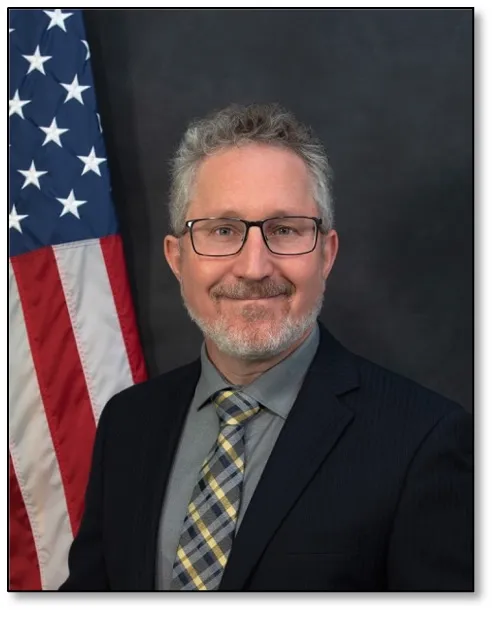
David Mollenhauer
Technical lead for composite damage evolution research, Air Force Research Laboratory
Currently employed in the Composites Branch of the Materials and Manufacturing Directorate, Air Force Research Laboratory, Dr. David Mollenhauer is the t in the branch. Dr. Mollenhauer’s in-house research duties include strategic and financial planning and execution of technical efforts in development of state-of-the-art mechanics modeling methods for damage evolution in laminated and textile composites. He is a recognized world expert in OMC damage modeling and experimental mechanics of composites. In addition to in-house technical research, Dr. Mollenhauer is a Program Manager with programs focused on composite certification, ICME of textile composites, and ICME of carbon/carbon composites, among a number of other national and international efforts. Dr. Mollenhauer is an active member of the American Society for Composites. Finally, Dr. Mollenhauer is known for his STEM education motivation efforts via his personal research and development of a large composite catapult system designed to throw pumpkins as far as possible. His team is currently in possession of the world record distance shot (1,151 meters) from a mechanical catapult.
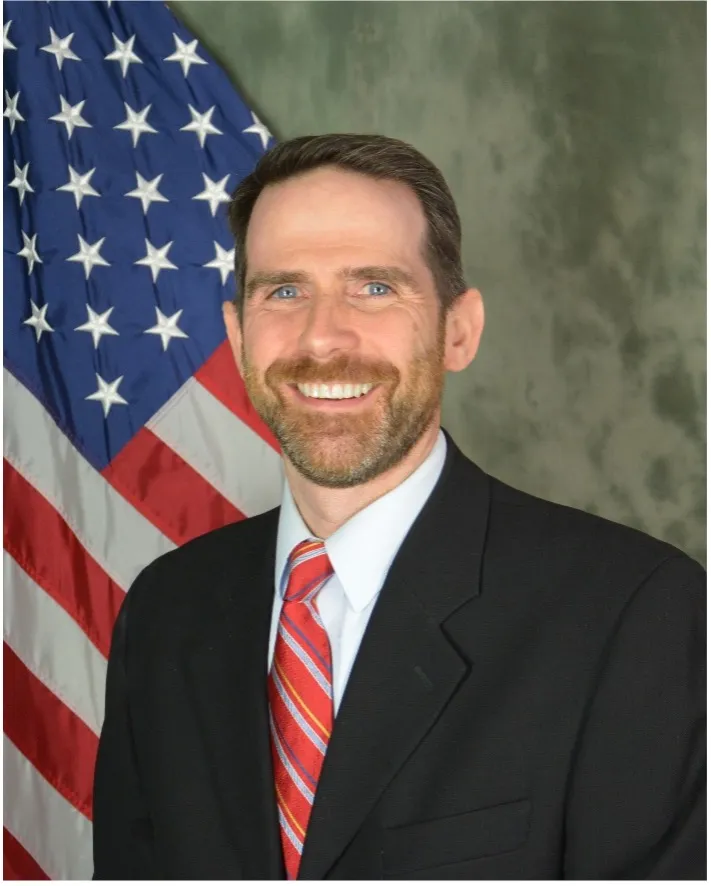
Michael Caton
Chief of the Polymer Matrix Composites (PMC) Branch of the Materials and Manufacturing Directorate, Air Force Research Laboratory
Dr Caton is the Chief of the Polymer Matrix Composites (PMC) Branch of the Materials and Manufacturing Directorate, Air Force Research Laboratory, Wright-Patterson Air Force Base, Dayton, Ohio. He supervises a multi-disciplinary team of 50+ Civilian, Military, and Contractor personnel to advance PMC technologies for the Air and Space Force through the execution of basic science out to applied research and development.
Prior to his current position, Dr. Caton was the Technical Director of the Systems Support Division of the Materials and Manufacturing Directorate, serving as the principal advisor on internal and external technical programs that delivered rapid response technology support to the operational Air and Space Force. Dr. Caton also served as the Assistant Chief Scientist for the Directorate, directly supporting the Chief Scientist in evaluating the Directorate/Laboratory technical research program, and earlier as the Turbine Engine Application Area Lead, overseeing the Directorate’s R&D portfolio enabling turbine engine applications. He devoted his initial ~13 years with the Directorate leading in-house research activities on the fundamental fatigue behavior of advanced aerospace alloys, significantly advancing the understanding of the sources of fatigue life scatter and developing revolutionary prediction approaches that reduce the uncertainty in determining safe life limits for fracture-critical components. In addition, he managed numerous, multi-million-dollar programs with a range of industrial and academic partners that have developed technology in the areas of advanced constitutive modeling, residual stress relaxation predictions, creep/fatigue damage characterization, and materials damage prognosis with a focus on transitioning integrated computational materials science & engineering (ICMSE) methods into industrial practice. In 1995, Dr. Caton received B.S.E. degrees, with Magna Cum Laude honors, from the University of Michigan in both Materials Science and Engineering and Mechanical Engineering. In 1998 he received an M.S.E. degree and in 2001 his Ph.D., both from the University of Michigan in Materials Science and Engineering. Dr. Caton has authored or co-authored over 25 technical papers, which have been cited over 1000 times. He has authored or co-authored over 100 conference presentations, giving 20+ as an invited speaker. As a member of the Engine Systems Prognosis Team, he was honored in 2009 with the AFRL/RX Director’s Team Award and recognized as a Finalist for the AFRL Commander’s Cup Team Award. Dr. Caton was also honored with the Charles J. Cleary Award for Scientific Achievement in 2010 and the Vincent J. Russo award for Leadership Excellence in 2013.

Dr Li is an Associate Technical Fellow at Aurora Flight Sciences, a Boeing Company. As a Senior Structures Engineer, he served as the technical lead on several R&D programs including the structural energy storage/health monitoring for ARMY uncrewed aerial systems (sUAS), Ice Protection System (IPS) for the FAA CLEEN III Next Generation Inlet (787 EcoDemonstrator flight article), nanoreinforced composites for ONR VARCA and internal R&D topics ranging from sustainable/fast fabrication of multifunctional composites to advanced rotor blades for urban air mobility aircraft. He has also led systems/methods in rapid advanced aircraft development including freighter door/surround structures design, FARA internal structures design, AFRL WiSDM resin infused attritable wings, NASA ACC structural analysis, & MQ-25 manufacturing engineering.
His areas of focus include multifunctional composites, nanoengineered composite materials, integrated computational materials engineering, structural energy storage, structural health monitoring, and sustainable and fast production of composites. He has over 16 years of research, design, prototyping, and testing experience in composites and his previous industry experience also includes reusable spacecraft/launch vehicle structures at SpaceX as well as rotorcraft preliminary design at Sikorsky Aircraft. Dr. Li received his PhD, SM, and SB degrees in Aerospace Engineering from the Massachusetts Institute of Technology and serves on the AIAA Materials Technical Committee where he has led the technical programming on aerospace materials at AIAA SciTech conferences.
Student Speakers
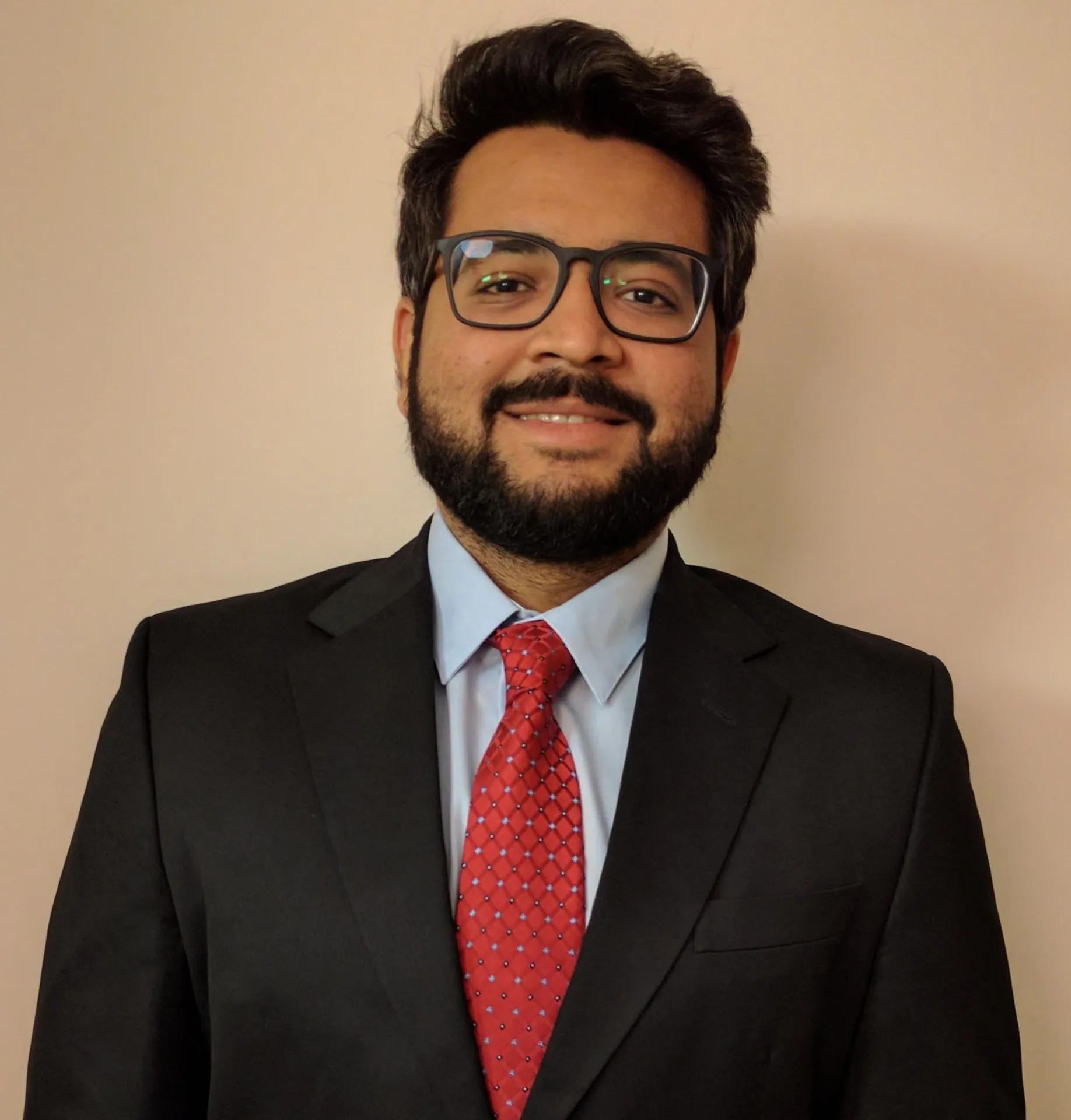
Shah is a Postdoctoral Research Scientist in the Department of Civil Engineering and Engineering Mechanics at Columbia University. He earned his PhD in Mechanical Engineering from UMass Lowell. His research focuses on the process modeling and multi-scale analysis of composite materials, leveraging computational micromechanics and Integrated Computational Materials Engineering (ICME) approaches. Dr Shah’s expertise spans composite manufacturing, material characterization, virtual manufacturing and testing, finite element analysis, and fracture mechanics, with applications in wind energy and aerospace composite systems. His work aims to bridge fundamental materials science with practical engineering solutions, advancing the design of durable, high-performance, and sustainable composite structures.
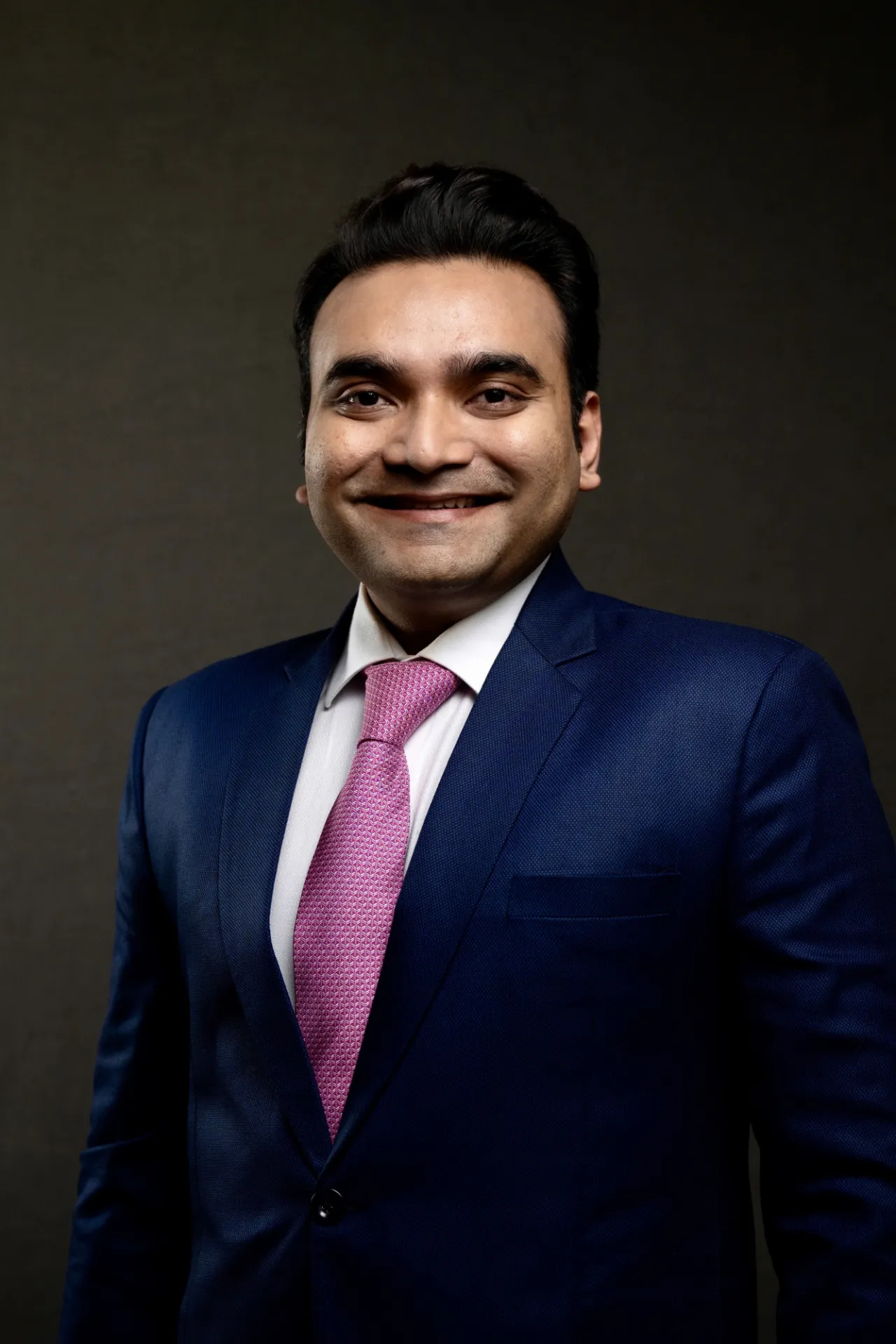
Patil is a Research Engineer working at the CMMR Lab in the Mechanical and Aerospace Engineering Department of Michigan Technological University. His research focuses on designing high-performance materials through computational methods, with an emphasis on atomistic simulations and multiscale modeling to accelerate discovery and innovation. He is particularly interested in exploring how atomic-scale structures influence macroscopic properties, especially under extreme environments and complex processing pathways. By leveraging tools such as molecular dynamics (MD) and density functional theory (DFT), he aims to uncover structure–property-processing relationships that inform the development of advanced materials for aerospace, energy, and structural applications. In an era where materials must meet rising demands for efficiency, reliability, and sustainability, his approach bridges atomic insight with engineering relevance to push the boundaries of what's possible.
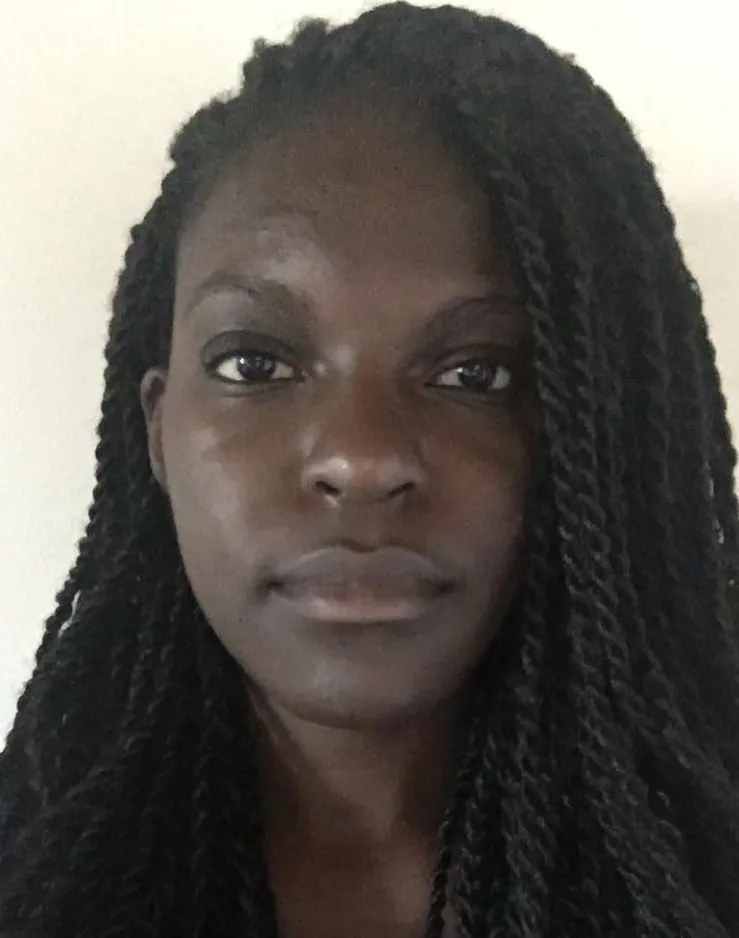
Kalima Bukenya is a PhD student in Engineering Mechanics at Columbia University, working under the mentorship of Associate Professor Marianna Maiaru. She is a NASA Space Technology Graduate Research Opportunity (NSTGRO) Fellow, collaborating closely with researchers at NASA Glenn Research Center. Her work centers on process modeling of advanced polymer matrix composites, with emphasis on constitutive modeling of thermosets, multiscale modeling, and residual stress prediction to reduce process-induced damage in textile composite structures for aerospace applications.