
ENME E6216: Structural Health Monitoring
Learn how sensor data and modeling techniques are used to detect and assess structural damage in real-world systems.
Course Overview
This course introduces you to the methodologies currently used in structural health monitoring (SHM) and damage assessment (DA) applications. Particular emphasis is given to approaches that rely on time-histories of the structural response, such as acceleration and displacement, as data to assess structural conditions.
After a brief introduction to SHM and DA, you will explore different dynamic models of structural systems and their interconnectivity, such as continuous vs discrete time, state space and autoregressive. You will also learn the fundamentals of frequency and time domain methods, including peak picking and stochastic subspace identification, applying them to real structural systems.
To conclude the course, you will focus on machine learning approaches to DA. You’ll be introduced to emerging damage sensitive features (DSFs), such as cepstral coefficients, and compare their performance to more traditional DSFs. You will also learn how to use algorithms like autoencoders to assess damage on a real bridge structure. Working knowledge in Matlab is recommended for this course.
Course Instructor
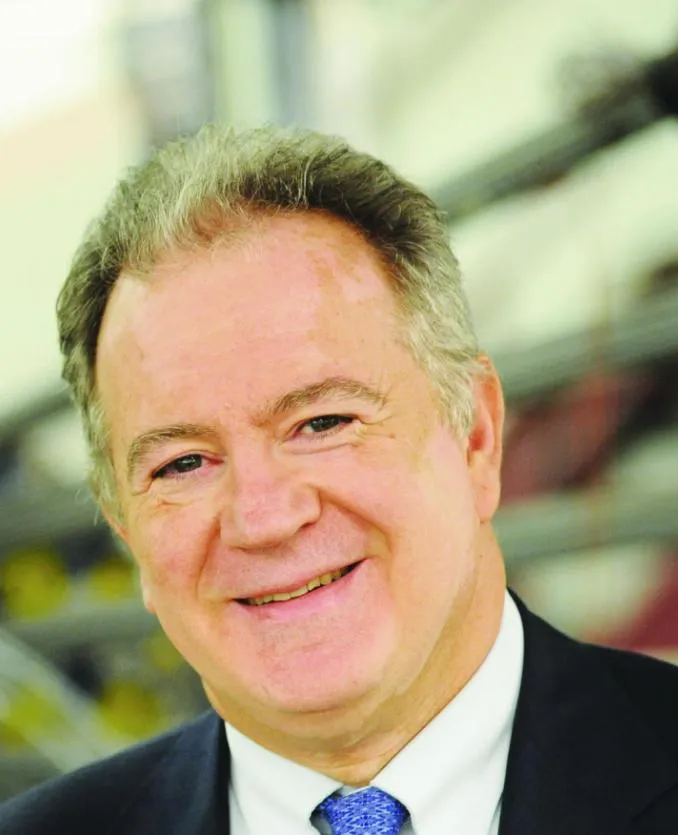
Raimondo Betti
Professor
Kidane is an associate professor in the Department of Civil Engineering and Engineering Mechanics at Columbia University. His field of research is experimental solid mechanics, which focuses on the mechanics of materials such as composites, nanocomposites, functionally graded materials, cellular materials, polycrystalline, and energetic materials at high-strain-rate loading and temperature. He is also an associate editor of the journal Mechanics of Materials.
Kidane obtained his PhD in Mechanical Engineering and Applied Mechanics from the University of Rhode Island (URI) and spent two years at the California Institute of Technology as a postdoctoral scholar. Prior to joining Columbia University, Kidane was an associate professor in the Department of Mechanical Engineering at the University of South Carolina.