
PLCE GU4444: The Future City: Transforming Urban Infrastructure
Discover how cutting-edge technologies and timeless design principles are transforming cities into smarter, safer, and more sustainable places to live.
Course Overview
This course responds to the increasing urbanization of modern society. It will introduce you to technological innovations that are helping cities around the world create healthier, safer, more equitable, and resilient futures for all citizens.
You’ll explore traditional disciplines - such as architecture, urban design and planning, real estate development, and structural, civil and mechanical engineering - that have collectively shaped cities as we know them today. You’ll also explore emerging fields that have defined the digital age and driven major improvements in municipal service delivery and urban life, including data analytics and smart information and communication technologies. In spanning the worlds of design, engineering, and planning, and in integrating both old and new fields, you will be better prepared to develop and implement the technologies that will underpin and help realize the promise of tomorrow’s “smart city”.
The syllabus covers five distinct sectors within the field of urban infrastructure: transportation and mobility, buildings, power, sanitation, and communications. For each sector, the nature and framework of current urban delivery systems will serve as the foundation for an exploration of key technologies that are likely to change – and in most cases radically improve - the ways that the built environment can support the lives of city residents.
Course Instructor
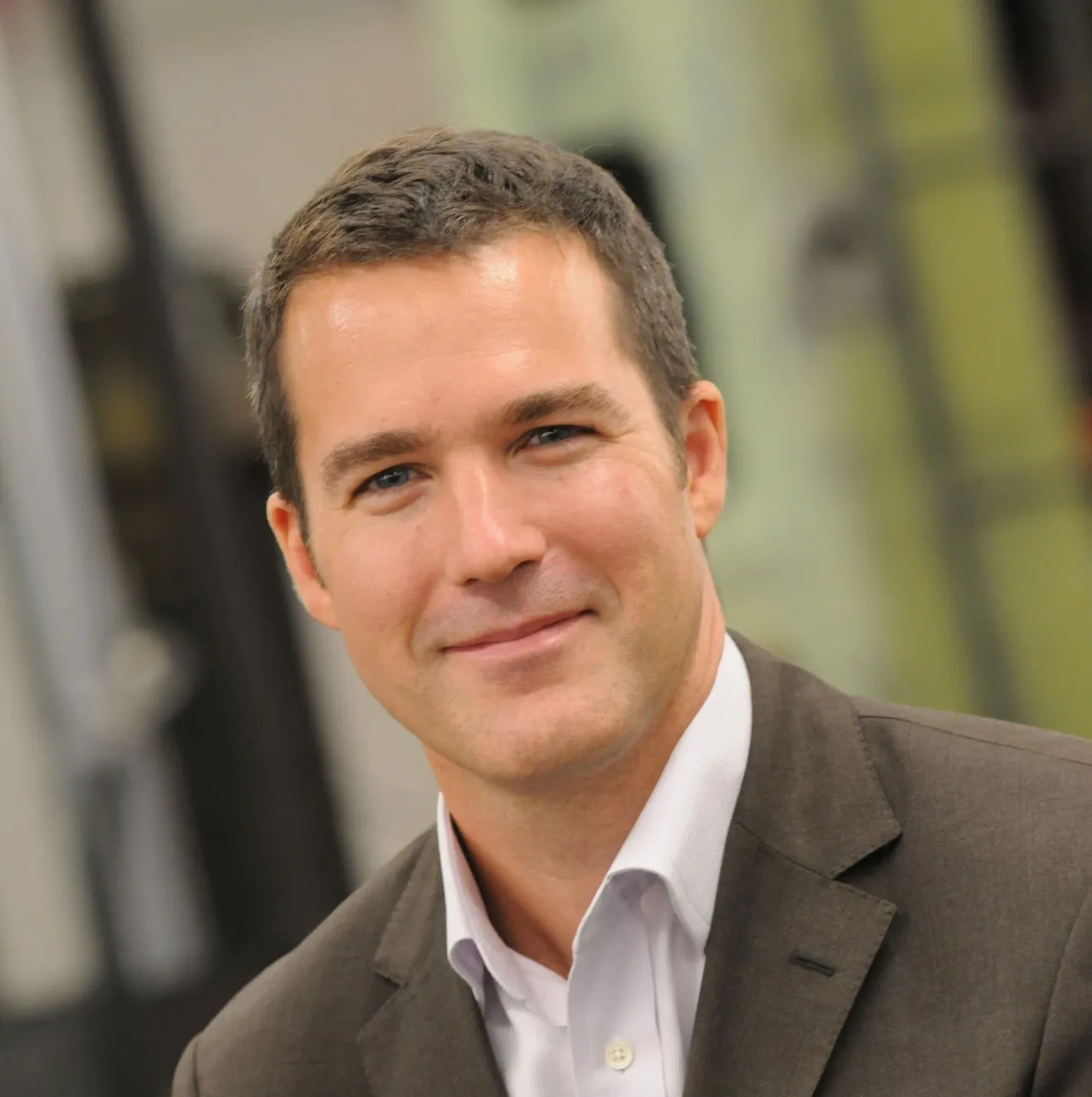
Andrew Smyth
Robert A.W. and Christine S. Carleton Professor of Civil Engineering and Engineering Mechanics
Andrew Smyth is the Robert A.W. and Christine S. Carleton Professor of Civil Engineering and Engineering Mechanics at Columbia University. He was the founding Co-Chair of the Smart Cities Center at the Columbia Data Science Institute. He specializes in structural health monitoring, using sensor information to determine the condition of critical infrastructure. Recently his interest in sensor network monitoring has expanded to large fleets of vehicles in urban environments. Smyth has been involved with the sensor instrumentation and vibration analysis and remote monitoring of a large number of iconic long-span bridges and landmark buildings and museums. His research interests include the development of data fusion and system identification algorithms to derive maximum information from large heterogeneous sensor networks monitoring dynamical systems, nonlinear system dynamical modeling and simulation, and natural hazards risk assessment.
He is the PI and Director of a $26M NSF Engineering Research Center for Smart Streetscapes. He is an NSF CAREER award recipient, 2008 ASCE Walter L. Huber Civil Engineering Research Prize recipient, and in 2013 was elected as a Fellow of the ASCE Engineering Mechanics Institute. In 2007 he was a Visiting Researcher at the Laboratoire Central des Ponts et Chausées, Paris, in 2014 a Visiting Researcher at KU Leuven in Belgium, and in 2019-20 a Visiting Professor at Trinity College, Dublin. In 2018-2019 he served on NY State Governor’s 6 member L-Train Tunnel Review Panel which proposed a rehabilitation redesign obviating the need for a 15-month shutdown. In 2018 received the Great Teacher Award from the Society of Columbia Graduates, and in 2023 received the USC Distinguished Alumni Award.
Smyth received his ScB and A.B. degrees at Brown University (1992) in Civil Engineering and Architectural Studies respectively. He received his MS in Civil Engineering at Rice (1994), an MS in Electrical Engineering (1997) and his PhD in Civil Engineering (1998) at the University of Southern California.