
Open Seminar | Joseph Bevitt | Australian Nuclear Science and Technology Organisation
Join us for a special open seminar to discover how cutting-edge neutron imaging and residual stress technologies are transforming engineering, advanced materials research, and even museum conservation — an inspiring showcase of powerful scientific tools, breakthrough applications, and exciting opportunities for collaboration.
Open to all Columbia students, the talk will be hosted by Joseph Bevitt, 3D Imaging Scientist and Group Manager at the Australian Nuclear Science and Technology Organisation’s (ANSTO) Australian Centre for Neutron Scattering.
From Structural Integrity to Artifact Preservation: Neutron Scattering Applications at ANSTO
This lecture aims to provide an introduction and overview of the neutron imaging and residual stress capabilities at the Australian Nuclear Science and Technology Organisation (ANSTO), highlighting their recent applications in engineering and material studies across advanced materials, and a diverse array of significant museum objects.
Radiography and tomography are critical tools that traditionally employ the use of X-rays to reveal and evaluate 3-D internal and surface renderings in medicine, engineering, geology, palaeontology and cultural heritage. In many circumstances, X-rays fail to adequately penetrate through high-density samples or yield poor internal contrast. In these cases, Dingo, the thermal-neutron imaging instrument at ANSTO often provides complementary, or superior contrast to X-rays, enabling the internal visualisation of up to 5 in / 125 mm through-thickness of concrete and steel.
Neutron diffraction strain scanning and texture measurements at ANSTO provide critical support to our rail and rail infrastructure, and informs improvements in welding, additive manufacturing and laser cladding methodologies. For example, strain scanning has validated new theoretical models that predict the residual stresses and critical deposition heights for laser additive manufacturing, accounting for both thermomechanical behaviour and metallurgical transformation that takes place by direct energy deposition techniques, such as laser cladding.
ANSTO’s neutron imaging and residual stress capabilities were recently showcased to the public with “The Invisible Revealed” exhibition at Sydney's Powerhouse Museum, a world-first collaboration that applied nine nuclear and synchrotron imaging techniques to answer long-standing curatorial and conservation questions associated with 26 heritage objects from the museum collection. A number of these examples, which we will share here, inspired visiting industry professionals to consider and pursue subsequent commercial and collaborative material investigations. This innovative project earned the Museum and Galleries National Award for Research and Innovation in 2022.
Access mechanisms to our facilities will be discussed, abilities, current limitations and forthcoming improvements. We hope this presentation catalyses opportunities for collaboration between Columbia University and ANSTO!
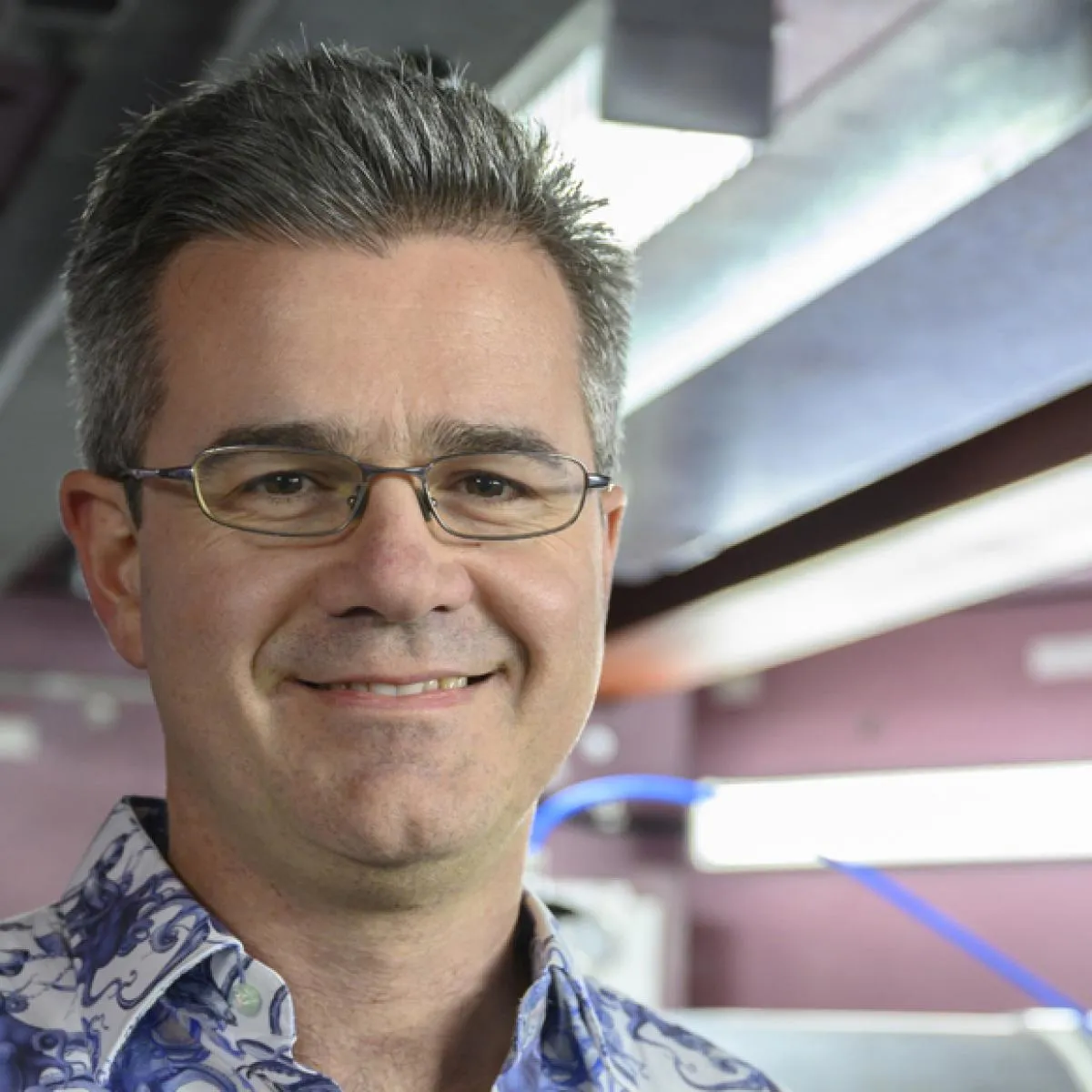
Joseph Bevitt
Dr Joseph Bevitt is a 3D imaging scientist and group manager at the Australian Nuclear Science and Technology Organisation’s (ANSTO) Australian Centre for Neutron Scattering, where he leads the Imaging and Strain Scanning Group. He specializes in applying neutron and synchrotron-based techniques to exceptionally preserved fossil remains, significant cultural heritage objects and engineered materials.
Joseph attained a PhD in Chemistry from the University of Sydney in 2006, managed ANSTO's Research Office and external access to its nuclear capabilities before transitioning to his current role. He holds a Powerhouse research fellowship, serves on the advisory board of the Australian Age of Dinosaurs Museum, Macquarie University’s Centre for Ancient Cultural Heritage and Environment, and is a Member of the IUCr Commission on Crystallography in Art and Cultural Heritage. His discoveries have been featured in Science, global news outlets, public exhibitions, postage stamps and coinage, bridging the gap between scientific innovation and cultural storytelling.