
CEEM Seminar | Marco Nie | Northwestern University
Is fare-free transit just?
This talk asks a simple but important question: Is fare-free transit (FFT) a just way to design and fund public transportation? To explore this, we draw on John Rawls’s theory of justice—especially the difference principle, which argues that policies should be judged by how well they serve the most disadvantaged members of society—and contrast it with a more familiar utilitarian approach that prioritizes maximizing total social benefit. Of course, transit is never truly free. Eliminating fares means losing farebox revenue, forcing agencies to either cut service or replace that revenue with other sources, such as local taxes or fees. Our analysis therefore considers both financial and operational trade-offs, while accounting for how congestion, income differences, and travelers’ mode choices interact within the transportation system. Beyond the extreme case of fully fare-free transit, we also study a targeted reduced-fare policy for disadvantaged travelers. We compare this approach with FFT in terms of equity, efficiency, and system performance, asking when a more targeted policy might achieve similar social goals with fewer unintended consequences. Using a case study based on empirical data from Chicago, we show that translating abstract moral principles into real-world transit policies inevitably involves compromise. The results highlight the tensions—and potential middle ground—between competing values such as equity, efficiency, and political feasibility that shape public transportation decisions.
Marco Nie
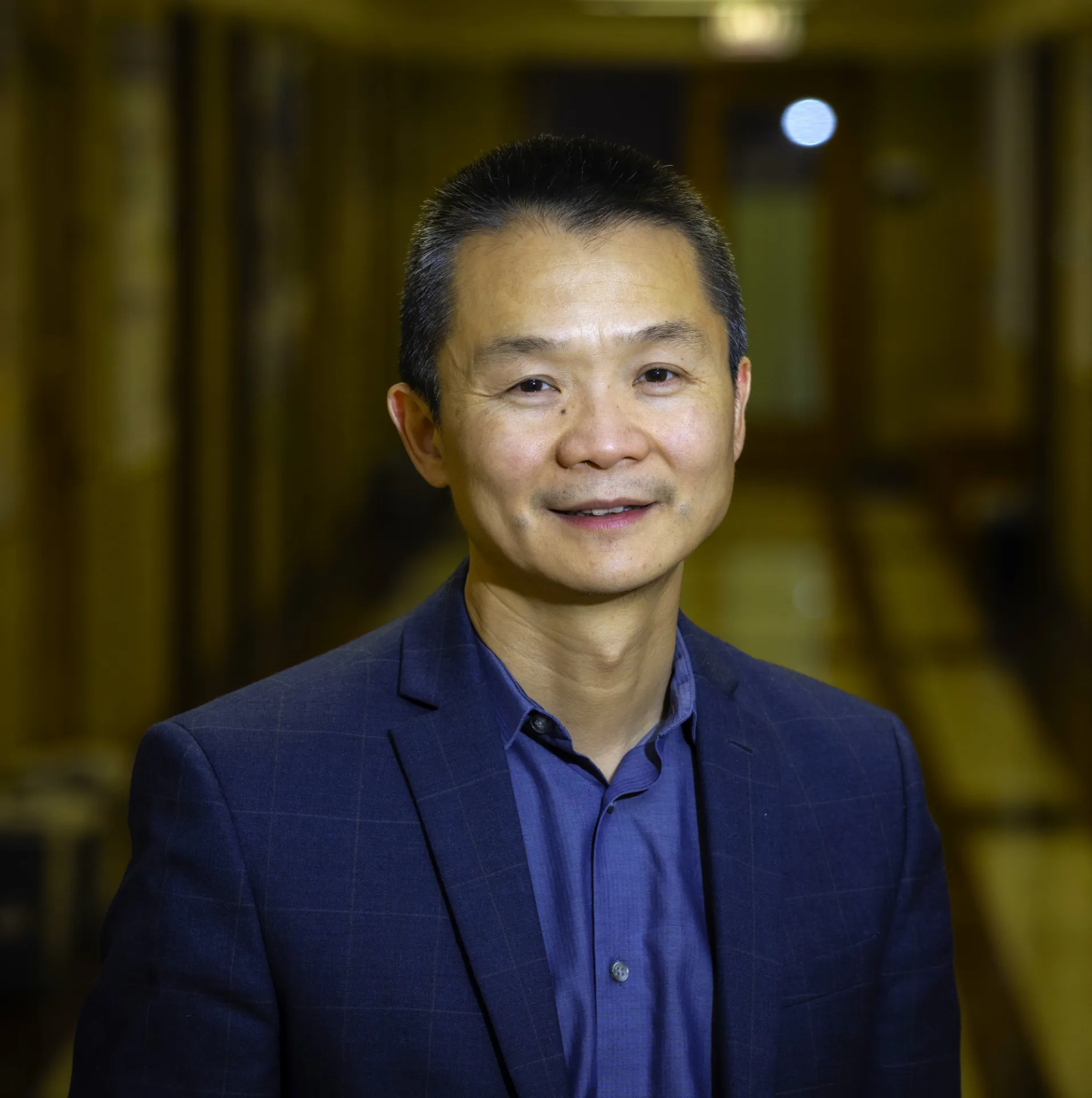
Dr. Marco Nie is Professor and Roxelyn and Richard Pepper Family Chair of Civil and Environmental Engineering at Northwestern University. He received his B.S. in Structural Engineering from Tsinghua University, his M.S. from the National University of Singapore, and his Ph.D. from the University of California, Davis. Dr. Nie’s research spans a wide range of topics in transportation systems analysis, transportation economics, and sustainable transportation. He has served on the TRB committees for Transportation Network Modeling and for Traffic Flow Theory and Characteristics. Currently, he is an Area Editor for Transportation Science, and a member of the Editorial Advisory Boards for Transportmetrica-B and Transportation Research Part A and B. His research has been supported by the National Science Foundation, the Transportation Research Board, the U.S. Department of Transportation, the U.S. Department of Energy, and the Illinois Department of Transportation.