
CEEM Seminar | Paola Crippa | University of Notre Dame
Sensitivity of Coupled Meso- to Micro-Scale Wind Simulations over Complex Terrain
Coupling Numerical Weather Prediction (NWP) mesoscale models with microscale Large Eddy Simulations (LES) is a promising technique to resolve fine-scale details of atmospheric motions, while retaining the large-scale forcing. The NWP-LES coupling is expected to more accurately simulate atmospheric boundary layer dynamics, which are essential for several applications, including wind energy. This presentation will focus on investigating challenges and uncertainties that hinder the operational application of coupled NWP-LES for wind energy and extreme weather events predictions. I will firstly discuss results from a recently developed large ensemble of LES driven by NWP boundary conditions over the complex terrain of the Perdigão region, Portugal, to test model sensitivity to different input factors. These factors include topography and land use datasets, initial and lateral boundary conditions, turbulence closures in the gray zone, and sub-grid scale models for the innermost LES domain. Topography and land use datasets are found to be the primary drivers of variability for time-averaged estimates, while turbulence modeling drives the sensitivity for instantaneous predictions, particularly during the day-to-night and synoptic transitions. Further sensitivity to land-surface parameters in capturing near surface winds is found when comparing against microscale observations. In the second part of this talk, I will illustrate the added value of coupled NWP-LES in predicting Sundowner events observed during the recent Sundowner Wind Experiment in the Santa Barbara, CA region. I will elucidate mechanisms by which multiscale drivers, including the increased mountain-top stability, the mountain wave activity, the deepening turbulent adiabatic layer, and the interaction with the stable marine boundary, influence the occurrence and characteristics of Sundowner events, beyond what traditional mesoscale simulations can capture.
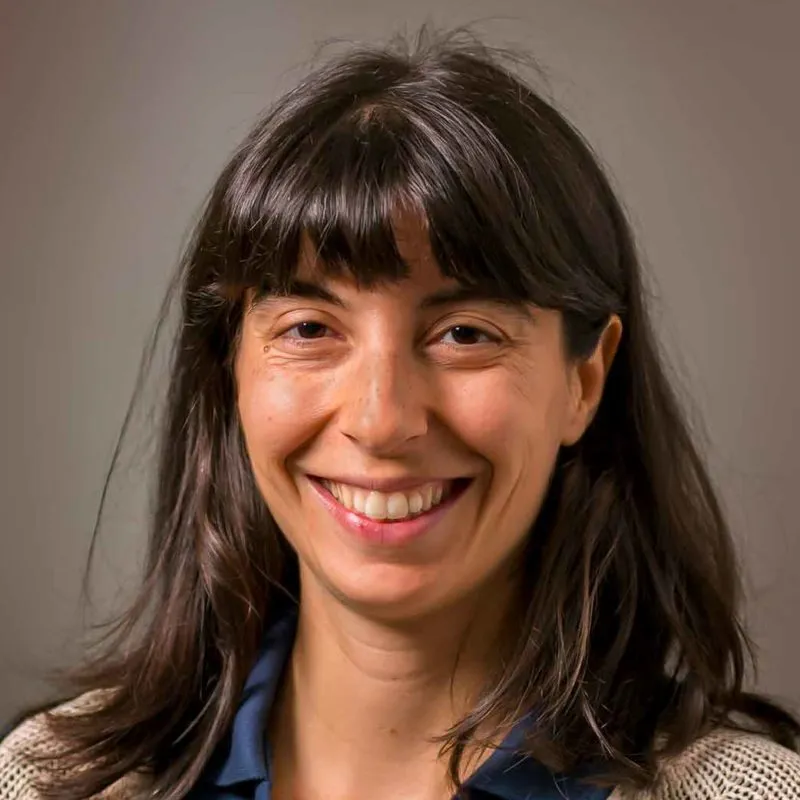
Paola Crippa
Paola Crippa is an Assistant Professor in the Department of Civil and Environmental Engineering and Earth Sciences at the University of Notre Dame. Among her recognitions, in 2015 she was awarded the L’Oréal-UNESCO UK and Ireland Fellowship For Women In Science to investigate the societal impacts of wildfires in South-East Asia and in 2023 the NSF CAREER award on multiscale model simulations. Her research focuses on investigating the spatio-temporal variability of atmospheric aerosols and associated impacts on human health and climate by using high resolution numerical models, as well as on coupled meso- to micro-scale simulations for a variety of engineering applications in the atmospheric boundary layer.