
The Honorable Burmister Lecture | Ikuo Towhata | Kanto Gakuin University, University of Tokyo

From Geotechnical Earthquake Engineering to Slope Monitoring
Driven by a deep interest in the dynamic behavior of the Earth, this talk explores advances in geotechnical earthquake engineering and their implications for hazard mitigation. The first half of the presentation examines disasters triggered by seismic and tectonic activity worldwide, including liquefaction, excess pore-water pressure, tectonic uplift and subsidence, and coseismic landslides. Drawing on laboratory experiments, small- and full-scale 1G model testing, and extensive field case histories across Asia - including Japan, China, the Philippines, Indonesia, Myanmar, India, Pakistan, and Iran, Towhata will discuss both observed failure mechanisms and innovative mitigation technologies developed in response.
Building on research into coseismic landslides, the second half of the talk focuses on slope monitoring and early warning systems for gravity- and rainfall-induced landslides. In collaboration with industry partners, Towhata has led the deployment of cost-effective sensor networks in Japan, China, Taiwan, India, and Bhutan. Recognizing that landslide-prone communities often lack access to expensive, high-precision instrumentation - and that the window between intense rainfall and slope failure may be only a matter of hours - this approach emphasizes affordability, scalability, and ease of data interpretation. Rather than relying on a single costly sensor, distributed networks of low-cost devices are deployed across vulnerable slopes to improve coverage and resilience.
The presentation will highlight case studies in which slope failures were successfully predicted prior to occurrence. To date, the system has recorded no false negatives, though some false positives have occurred. The talk will conclude with emerging research on the cumulative effects of fault activity on long-term slope instability, an area of growing importance in understanding seismic hazard and landscape evolution.
If you'd like to attend this seminar, please register here.
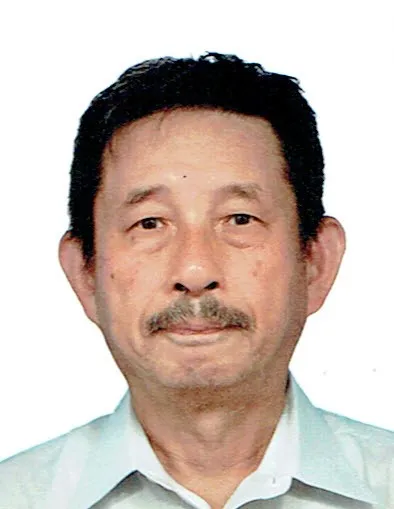
Ikuo Towhata
Ikuo Towhata received his Ph.D. from the University of Tokyo in 1982 and has built an internationally distinguished career in geotechnical engineering spanning academia, professional leadership, and industry. Early appointments included a postdoctoral fellowship at the University of British Columbia and an Assistant Professorship at the Asian Institute of Technology. He later served as Professor of Civil Engineering at the University of Tokyo (1994–2015), where he is now Professor Emeritus, and has been a Visiting Professor at Kanto Gakuin University since 2015.
In recent years, his professional focus has expanded to include leadership roles in the private sector, including an architectural design firm established in 1932 and a geotechnical consulting practice. He also serves as a Distinguished Visiting Professor at Indian Institute of Technology Bombay and has held visiting appointments at University of Auckland, Hohai University (formerly Nanjing River and Sea University), and the Budapest University of Technology and Economics.
He has provided significant leadership to the profession, serving as President of the Japanese Geotechnical Society and as Vice President of the International Society for Soil Mechanics and Geotechnical Engineering.
Over the course of his career, he has authored more than 500 research papers and several influential books, including Geotechnical Earthquake Engineering (Springer, 2008), Coseismic Landslides: Phenomena, Long-term Effect and Mitigation (Springer, 2022; Chief Editor), and Slope Monitoring for Early Warning of Rapid Landslides – Mitigating Rainfall-Induced Disasters (CRC Press, 2025; co-authored). His contributions have been recognized through prestigious international awards and invited lectures, including the Shamsher Prakash Award in Soil Dynamics, the Heritage Lecture at the 16th International Conference on Soil Mechanics and Geotechnical Engineering (Osaka, 2005), and the Ishihara Lecture of TC203 of ISSMGE (Rome, 2019).