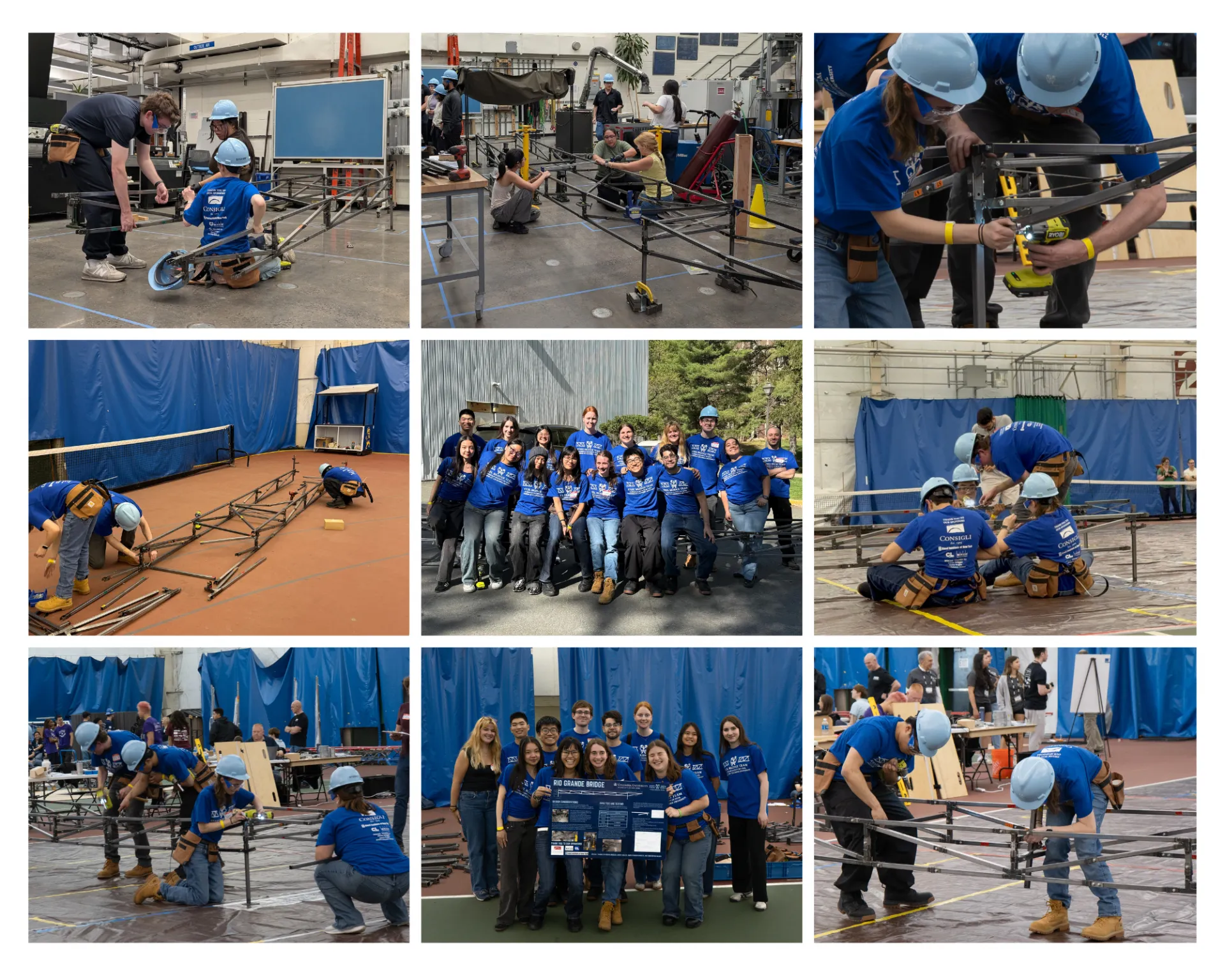
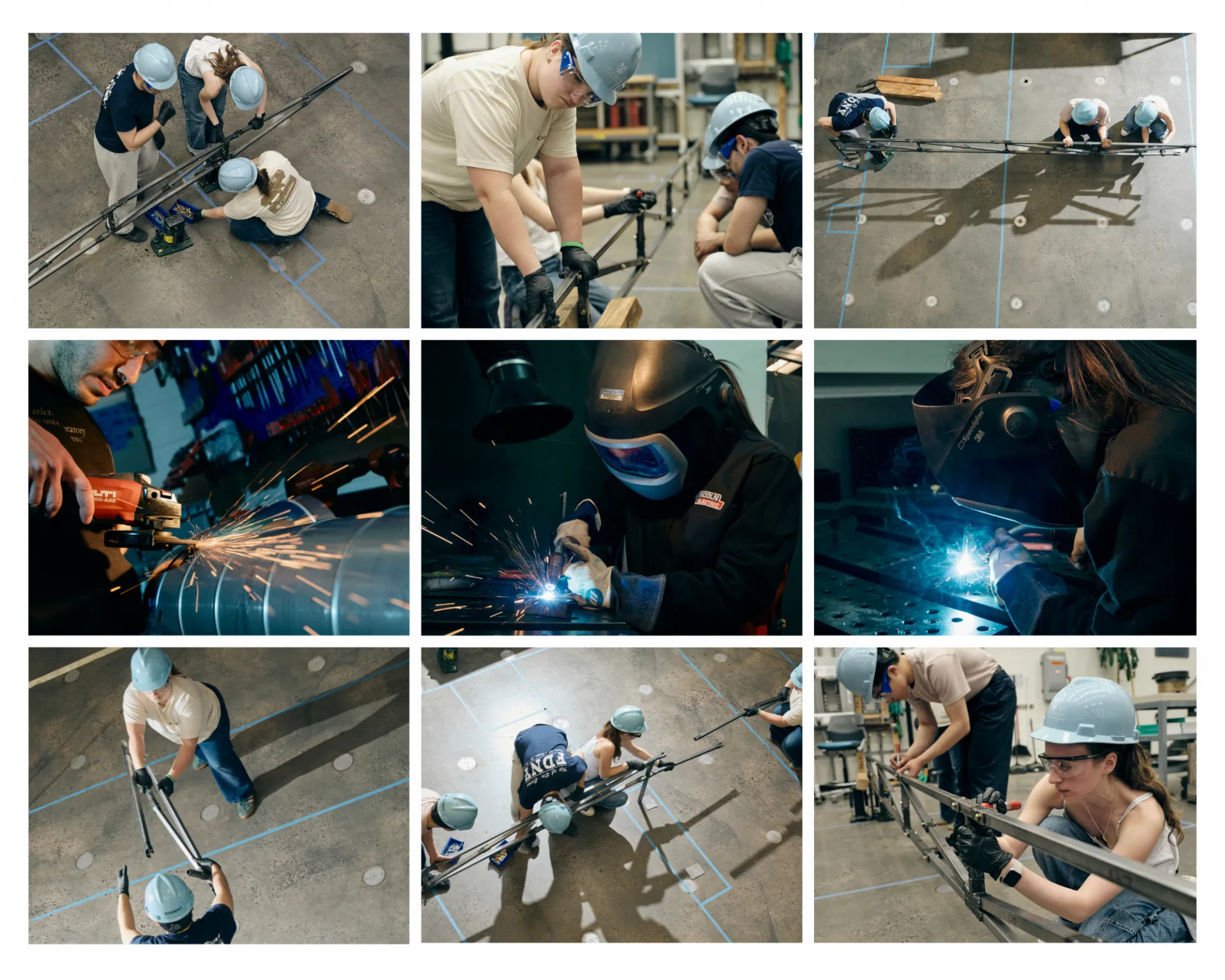
Columbia’s undergraduate civil engineering students banded together to design, fabricate, and build a 24-foot steel bridge model from scratch to compete at the AISC Student Steel Bridge Competition. While most competing teams outsource their members from professional steel fabricators, Columbia students utilized our cutting edge facilities to fabricate their own members, in-house. Students themselves cut all the steel, drilled all the holes, and welded all the pieces together right here on campus, at our renowned Carleton Laboratory.
Led by team captains Tahlly Puangsawas and Sara Kugler, a team of 20 students contributed to the project through building, design, and fabrication teams. While the design and fabrication team created all of their members (aka pieces) on campus, it was up to the build team to actually assemble the bridge at the competition in under 30 minutes. Following the allotted time, bridges were judged using lateral deflection and load-bearing tests.
The day of the competition presented its own challenges (including an out of commission impact driver aka a motorized wrench), but also highlighted some great triumphs, including the team finishing their bridge under time! While the students did not get to load test this year as their bridge did not meet the requirements of the lateral deflection test (how much a bridge sways for us non-engineers), we are very proud of their efforts to bring Columbia back into the fold of the AISC Student Steel Bridge Competition. The students would like to emphasize that though the cantilever did not meet the requirements, the mid-span was solid.
Given Columbia’s 8 year-long hiatus, students had scarce amounts of mentorship, advice, and experience from past competitors going into the project. In true Columbia fashion, they did not shy away from the challenge, but rather committed themselves, learned from scratch, and finished with grit. Fabricating all the members in-house (and doing it all for the first time) required significant time and effort, only leaving enough time for students to practice assembling the bridge once ahead of the competition. Despite only practicing the one time (just 2 hours prior to the competition), and with most schools able to practice 10+ times prior to the competition, Columbia still finished their bridge under the allotted time constraints (with three seconds to spare).
Their goal next year is to grow their team and continue adding to the bank of know-how that only comes from trying, failing, and then trying again until you’ve got it. Not only did the students show the trademark perseverance, grit, and moxie of Columbia Engineers, but they learned cross-functional technical and non-technical skills that will equip them for real-world projects and problem solving. The venture was an all-around success, as the project not only allotted an avenue for students to implement (and learn) new technical skills, but also fostered an environment for community-building across the different class years and engineering majors of undergraduate students.
We could not be prouder of their efforts, and look forward to rooting them on (at the load bearing test) next year!
More information about the competition here.